Monocle, July/August 2025
By leaning into their heritage and generational know-how, these three Gallic brands have found ways to thrive in the face of stiff international competition.
See the PDF
INTRO
In France, the idea of patrimoine runs deep: the belief that knowledge and craft can sustain a business as it’s passed down generations. The small or medium-sized businesses associated with this notion are often inextricable from their communities, buoying local livelihoods while pulling in profit. But many heritage businesses have folded after decades of struggling against cheaper overseas competitors. Here, we meet three historic or family-run French brands that turned things around in choppy waters, leaning into their values to find new success.
Duralex
Tableware
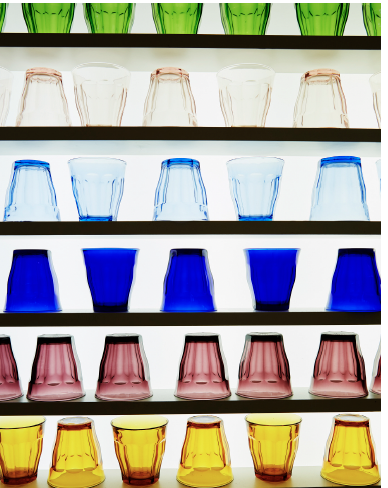
Duralex’s general manager, François Marciano, is showing off one of the French tableware maker’s classic Picardie glasses. As he turns it in his hand, he fumbles, causing the dark-blue glass to fall and monocle to scramble to stop it from smashing. When it happens a second and third time – the glass bounces harmlessly against the showroom floor on each occasion – it becomes clear that this is a party trick to demonstrate how durable Duralex is. “We’re the only glassmaker doing tempered glass like this,” says Marciano, explaining that the brand’s glass is several times more solid than the conventional stuff.
With its enduring design and almost unbreakable product, Duralex – a global household name – is a staple of school canteens and domestic kitchens. Established in 1945 near Orléans, its factory HQ is the sort of place that politicians visit during their campaigns to herald a titan of French industry. But the company’s recent history makes for less auspicious reading. It was sold by its then-owner in 2021 to the International Cookware group, the parent company of Pyrex; at times, the leadership seemed more interested in shareholders than safeguarding Duralex’s future. It has experienced six insolvencies since 1996.
When the company was placed into receivership last year, Duralex’s employees decided that enough was enough – it was time to return the brand to its former glory. They put forward a plan for co-operative ownership, known in French as a société coopérative et participative (Scop). Their proposal was accepted in court. Of the brand’s 236 employees, 64 per cent opted into becoming owners, which required a minimum investment of €500.
Drafted in at the time of the co-operative takeover, Vincent Vallin has spent a career at multinationals, including a stint in the UK. The cool-headed director of strategy and development is realistic about the task at hand. Talking to monocle in a slightly old-fashioned boardroom with brand photos hanging on the walls, he is keen to point out that Duralex’s new ownership isn’t interested in austerity or cuts. There’s a clear plan in place. “The project is based on generating more cashflow by selling more and better, increasing the top line and the margin,” he says. “We also need to streamline the product assortment.”
Because banks won’t lend to Duralex as a result of its financial record, the company has generated funds by selling its HQ to the local municipality and leasing it back. These liquid assets should buy Duralex three years to turn things around, which Vallin believes is time enough. He intends to emphasise the brand’s simplicity and good design, as well as the fact that almost everything that goes into making the glass is French, including sand from Fontainebleau. The team must “extract more value out of the market and make Duralex more premium”, says Vallin. In short, it needs to be seen as more than just a basic tableware staple. It’s also becoming more entrepreneurial. “When I came in, there were only three sales and marketing employees,” says Vallin. “I hired three more for sales in France, five for export and five marketeers.”
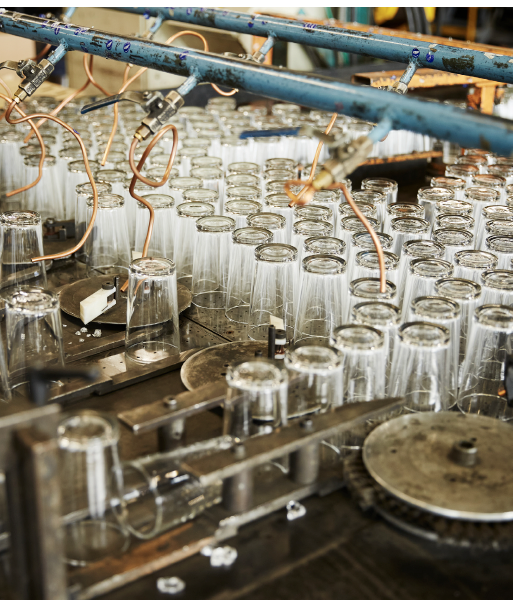
On the factory floor, orange molten glass zips around the production line as automated arms hiss and thud. Even to non-expert eyes, it’s clear that the facilities need an update. But Duralex has one thing in abundance: heart. “I’ve given my life to this job,” says Stéphane Lefevre, a team leader who, like everyone else on the factory floor, is dressed in blue work overalls. “The co-operative wasn’t a choice. It was an obligation.” Lefevre has spent more than 24 years at the company and isn’t ready to give up on it yet.
There’s clearly a feeling that Duralex is finally in the right hands and it is ambitious about the future. Back in the showroom, Marciano is hovering around the glassware and food containers on display and enthusing about new items, from the recently released black espresso cups to premium pint glasses that are set for release next year. A new website launched in June, while in May, Duralex opened Café Duralex, its first bricks-and-mortar outlet in the French capital, collaborating with grocery shop l’Épicerie de Loïc B. (Another opened at the end of last year in Orléans.) There are also plans for a factory shop and a museum in La Chapelle-Saint-Mesmin in the next few years.
Duralex might be hitting the gas after its years of torpor but a slow-and-steady approach is still the order of the day. Marciano, the glass-dropping joker, turns serious for a moment. “With a brand like ours,” he says, “you can’t make mistakes.”
How Duralex is turning it around:
1. Since going into employee ownership, the brand has been investing in both people and product.
2. Leveraging its “Made in France” legacy.
3. Getting closer to the buyer by recognising regional nuance and the need for new physical shops.