Monocle’s Salone del Mobile newspaper, April 2023
While Milan might have its fair share of modern, fusion and experimental eating spots, its residents and visitors in the know still keep turning up at the city’s historic ‘trattorie’. Why? To get a taste of Milanese heritage.
See the PDF
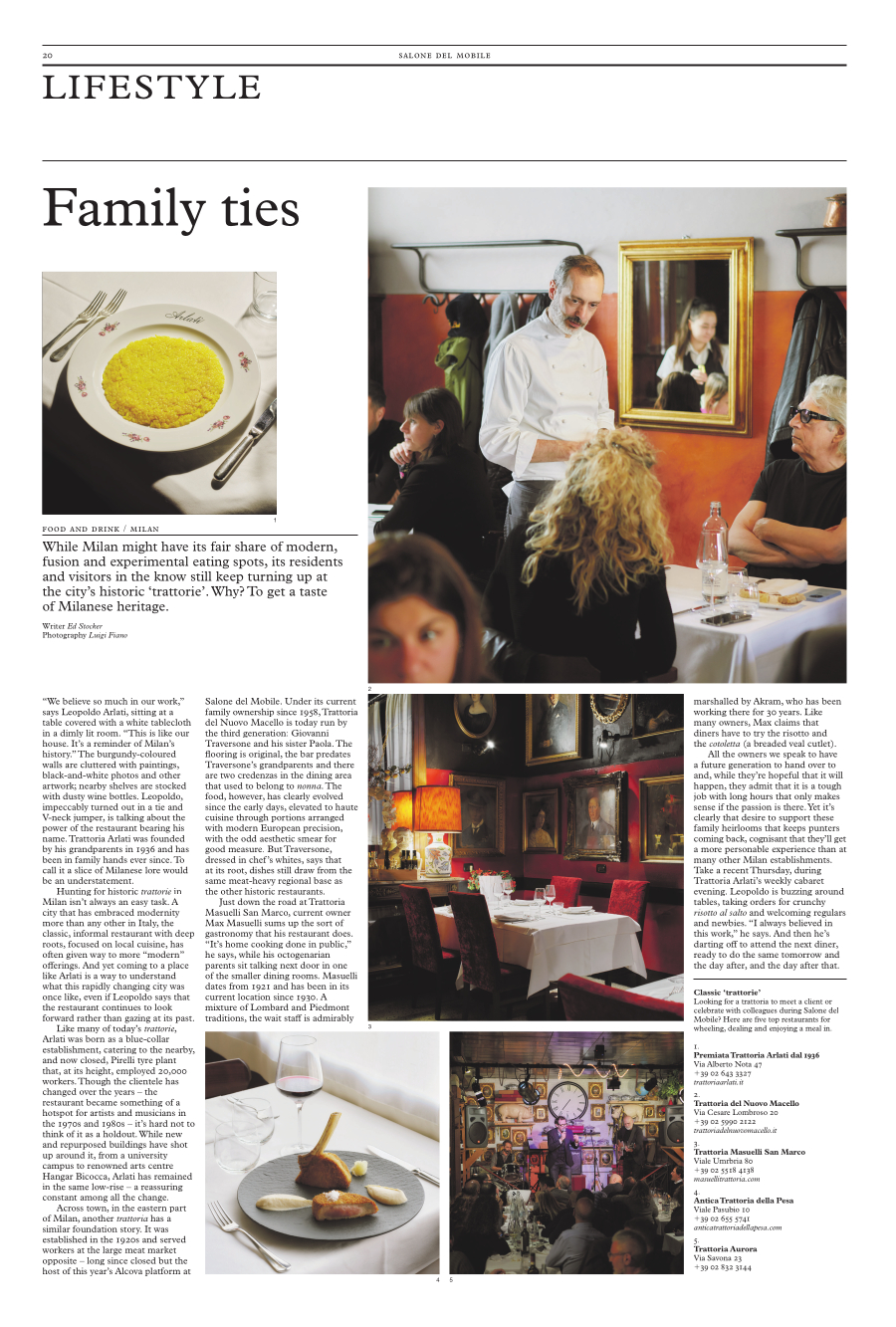
“We believe so much in our work,” says Leopoldo Arlati, sitting at a table covered with a white tablecloth in a dimly lit room. “This is like our house. It’s a reminder of Milan’s history.” The burgundy-coloured walls are cluttered with paintings, black-and-white photos and other artwork; nearby shelves are stocked with dusty wine bottles. Leopoldo, impeccably turned out in a tie and V-neck jumper, is talking about the power of the restaurant bearing his name. Trattoria Arlati was founded by his grandparents in 1936 and has been in family hands ever since. To call it a slice of Milanese lore would be an understatement.
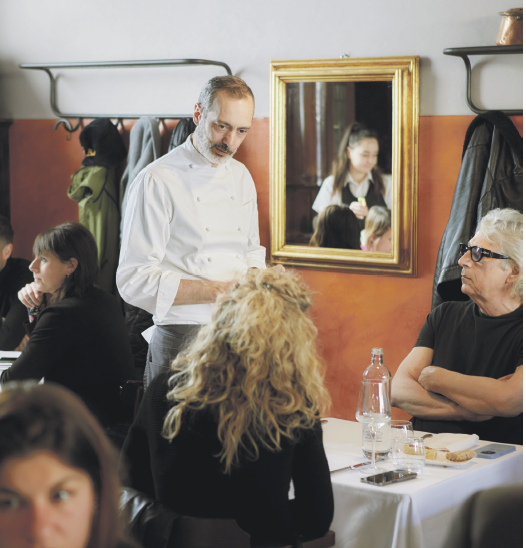
Hunting for historic trattorie in Milan isn’t always an easy task. A city that has embraced modernity more than any other in Italy, the classic, informal restaurant with deep roots, focused on local cuisine, has often given way to more “modern” offerings. And yet coming to a place like Arlati is a way to understand what this rapidly changing city was once like, even if Leopoldo says that the restaurant continues to look forward rather than gazing at its past.
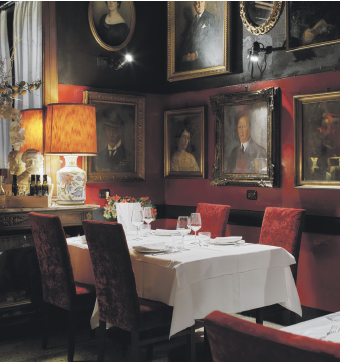
Like many of today’s trattorie, Arlati was born as a blue-collar establishment, catering to the nearby, and now closed, Pirelli tyre plant that, at its height, employed 20,000 workers. Though the clientele has changed over the years – the restaurant became something of a hotspot for artists and musicians in the 1970s and 1980s – it’s hard not to think of it as a holdout. While new and repurposed buildings have shot up around it, from a university campus to renowned arts centre Hangar Bicocca, Arlati has remained in the same low-rise – a reassuring constant among all the change.
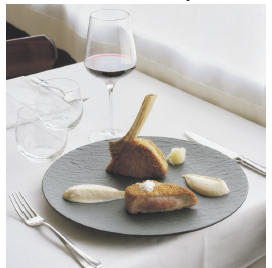
Across town, in the eastern part of Milan, another trattoria has a similar foundation story. It was established in the 1920s and served workers at the large meat market opposite – long since closed but the host of this year’s Alcova platform at Salone del Mobile. Under its current family ownership since 1958, Trattoria del Nuovo Macello is today run by the third generation: Giovanni Traversone and his sister Paola. The flooring is original, the bar predates Traversone’s grandparents and there are two credenzas in the dining area that used to belong to nonna. The food, however, has clearly evolved since the early days, elevated to haute cuisine through portions arranged with modern European precision, with the odd aesthetic smear for good measure. But Traversone, dressed in chef’s whites, says that at its root, dishes still draw from the same meat-heavy regional base as the other historic restaurants.
Just down the road at Trattoria Masuelli San Marco, current owner Max Masuelli sums up the sort of gastronomy that his restaurant does. “It’s home cooking done in public,” he says, while his octogenarian parents sit talking next door in one of the smaller dining rooms. Masuelli dates from 1921 and has been in its current location since 1930. A mixture of Lombard and Piedmont traditions, the wait staff is admirably marshalled by Akram, who has been working there for 30 years. Like many owners, Max claims that diners have to try the risotto and the cotoletta (a breaded veal cutlet).
All the owners we speak to have a future generation to hand over to and, while they’re hopeful that it will happen, they admit that it is a tough job with long hours that only makes sense if the passion is there. Yet it’s clearly that desire to support these family heirlooms that keeps punters coming back, cognisant that they’ll get a more personable experience than at many other Milan establishments. Take a recent Thursday, during Trattoria Arlati’s weekly cabaret evening. Leopoldo is buzzing around tables, taking orders for crunchy risotto al salto and welcoming regulars and newbies. “I always believed in this work,” he says. And then he’s darting off to attend the next diner, ready to do the same tomorrow and the day after, and the day after that.